Updated July 2026. This XCarspace guide explains gas, hybrid, plug-in hybrid, and electric cars in plain English, with buyer-focused tables, real ownership trade-offs, and official reference links.
Quick Answer: Which Powertrain Should You Buy?
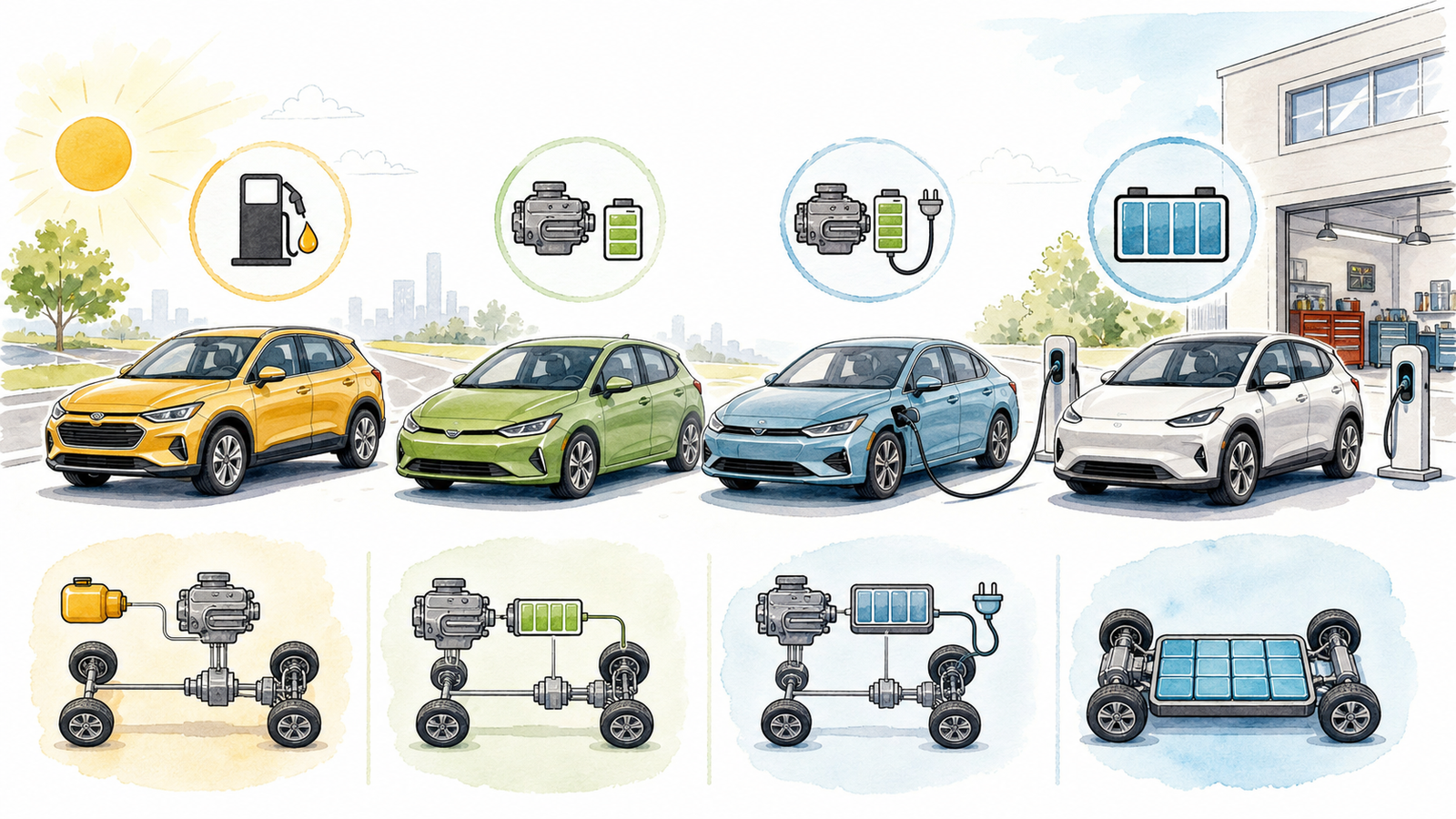
If a car buyer only remembers one thing, make it this: the best powertrain is not the newest one. It is the one that fits the daily route, parking situation, climate, road-trip habits, and budget. A gasoline car can still make sense. A hybrid is often the easiest upgrade. A plug-in hybrid can be brilliant or wasteful depending on charging discipline. An EV can be the cheapest car to run if home charging and range needs line up.
| Powertrain | Best For | Biggest Strength | Main Risk | XCarspace Verdict |
|---|---|---|---|---|
| Gasoline | Low-mileage drivers, rural buyers, tight budgets | Simple refueling and broad service access | Fuel cost volatility | Still sensible when purchase price matters most |
| Hybrid | Commuters, city/suburban drivers, families | Better fuel economy without charging | Higher upfront cost than a similar gas model | The safest mainstream upgrade for most buyers |
| Plug-in Hybrid | Drivers with home charging and short daily trips | Electric commuting plus gas road-trip backup | Poor value if never plugged in | Excellent for disciplined owners, mediocre for lazy ones |
| Electric Vehicle | Home-charging households, high-mileage commuters | Low running cost and smooth power delivery | Charging access, winter range, depreciation swings | Best when charging is boring, predictable, and cheap |
Powertrain Basics Without the Sales Pitch
| Term | What It Means | What Buyers Usually Miss |
|---|---|---|
| ICE | Internal combustion engine, usually gasoline or diesel | Engine efficiency depends heavily on vehicle weight, gearing, and driving speed |
| Hybrid / HEV | Gas engine plus electric motor and small battery | It does not plug in; the car manages the battery itself |
| Plug-in Hybrid / PHEV | Gas engine plus larger battery that can be externally charged | The electric range only pays off if the owner actually charges it |
| Battery Electric / BEV | No gas engine; energy comes from a high-voltage battery | Range, charging speed, and local electricity price matter more than peak horsepower |
| MPGe | EPA efficiency measure for electric energy use | It is useful for comparison, but not the same as gas MPG in daily budgeting |
| Regenerative Braking | Motor recovers some energy while slowing the car | It helps most in stop-and-go driving, less on steady highway cruising |
The Real Cost Question: Purchase Price vs Operating Cost
The cheapest car to buy is not always the cheapest car to own. The opposite is also true: a high-tech powertrain can look smart on paper and still lose money if the buyer overpays, cannot charge at home, or sells during a weak resale cycle.
| Cost Area | Gas | Hybrid | Plug-in Hybrid | EV |
|---|---|---|---|---|
| Upfront price | Usually lowest | Moderate premium | Often higher | Wide range; incentives vary |
| Fuel / energy cost | Depends on gas prices | Lower gas use | Very low if charged often | Often lowest with home charging |
| Maintenance | Traditional oil, belts, exhaust systems | Similar but brakes may last longer | More complex system mix | No oil changes; tires can wear faster |
| Resale risk | Predictable on popular models | Usually strong for trusted brands | Model-specific | Can swing with battery tech, incentives, and pricing cuts |
| Best ownership pattern | Low annual mileage | Mixed city/highway use | Short daily trips plus occasional long drives | Predictable daily driving with reliable charging |
Hybrid Cars: The Quiet Winner for Many Households
A good hybrid is not trying to feel exotic. That is the point. It uses an electric motor to help the gas engine, recovers some energy while braking, and often uses less fuel in traffic. For buyers who do not want to install a charger or change road-trip habits, a hybrid can be the cleanest practical upgrade.
| Hybrid Advantage | Why It Matters | Buyer Check |
|---|---|---|
| No charging routine | Works for apartments, street parking, and busy households | Confirm real-world MPG from owners, not just sticker ratings |
| Strong city efficiency | Regenerative braking helps most in stop-and-go traffic | Highway-only drivers may see a smaller benefit |
| Lower range anxiety | Fuel stations remain easy to find | Tank size and highway MPG still matter for road trips |
| Less brake wear | Regeneration can reduce friction-brake use | Tire and suspension costs still depend on vehicle weight |
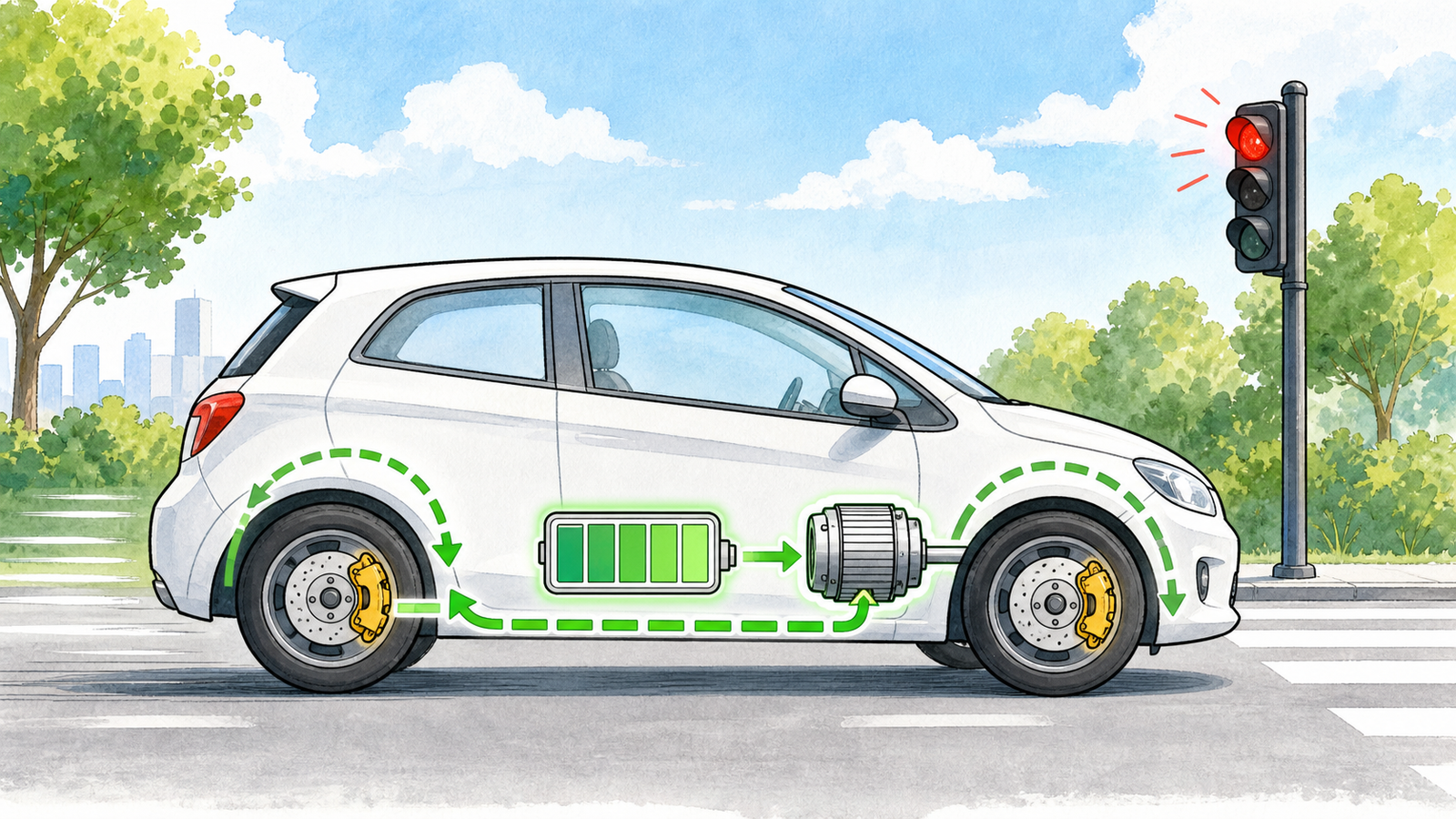
Regenerative Braking: Useful, But Not Magic
Regenerative braking turns the electric motor into a generator while the vehicle slows down. Some kinetic energy that would normally become brake heat is sent back to the battery. It is one reason hybrids and EVs feel efficient in town.
| Driving Situation | Regeneration Benefit | Why |
|---|---|---|
| Stop-and-go city traffic | High | Frequent slowing gives the system repeated chances to recover energy |
| Suburban errands | Medium-high | Moderate speeds and repeated stops are ideal |
| Steady highway cruising | Low | There is less braking, so there is less energy to recover |
| Mountain descents | High, within limits | Long downhill sections can recover energy, but batteries have charge and heat limits |
| Emergency braking | Limited | Friction brakes still do the heavy safety work |
Plug-in Hybrid Cars: Brilliant When Used Correctly
A plug-in hybrid is a deal with the owner. Charge it regularly and it can cover many daily miles on electricity. Ignore the plug and it becomes a heavier, more expensive hybrid with unused potential.
| PHEV Owner Type | Result | XCarspace Advice |
|---|---|---|
| Charges at home nightly, drives under electric range most days | Excellent fuel savings | Strong candidate |
| Charges at work several times a week | Good, if workplace access is reliable | Check charging rules and cost |
| Lives in an apartment with no reliable charging | Weak value | Consider a regular hybrid instead |
| Mostly highway road trips | Mixed benefit | Compare gas MPG after the battery is depleted |
| Wants one vehicle for commuting and vacations | Potentially ideal | Best if daily electric range matches weekday use |
Electric Cars: Best When Charging Is Easy
An EV should make ownership simpler, not more dramatic. The best EV owner is usually not the person most excited by acceleration. It is the person who can wake up to a charged car, drive a predictable route, and pay reasonable electricity rates.
| EV Question | Good Sign | Warning Sign |
|---|---|---|
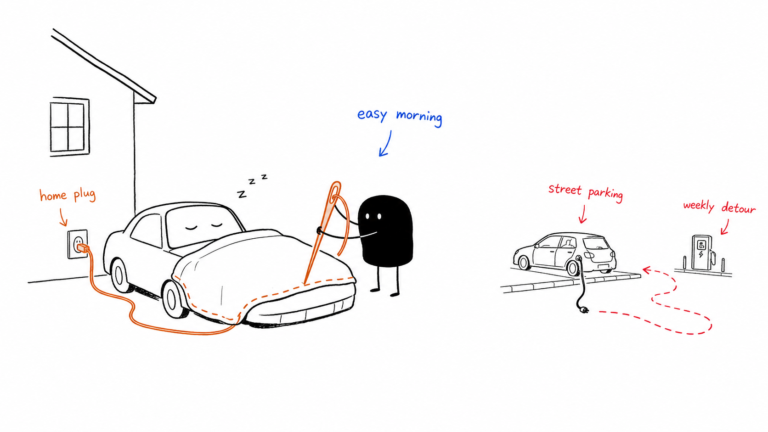
| Can you charge at home? | Garage, driveway, or assigned charger | Street parking with no reliable charging plan |
| How far is the daily drive? | Well below rated range | Near the limit in winter or at highway speeds |
| Do you take frequent road trips? | Routes with dependable fast chargers | Rural or remote routes with thin charging coverage |
| Local electricity price? | Low off-peak rates | High rates plus paid public charging dependence |
| Climate? | Mild or manageable winters | Very cold climate without charging buffer |
Gas Cars: Not Dead, Just More Specific
Gasoline cars still make sense for buyers with low annual mileage, low purchase budgets, rural driving patterns, or limited charging access. The mistake is treating gas as outdated by default. The smarter view is narrower: gas is still practical, but it needs a reason.
| Gas Still Makes Sense If… | Why | Better Alternative If… |
|---|---|---|
| You drive fewer than 7,000 miles per year | Fuel savings may not offset a big price premium | A hybrid costs only slightly more |
| You buy used on a strict budget | Lower purchase price can dominate ownership math | Fuel prices are high and driving is mostly city traffic |
| You live far from charging infrastructure | Fuel access is still simpler | You can install home charging |
| You tow or drive remote routes often | Range and refueling speed matter | A suitable hybrid truck/SUV fits the job |
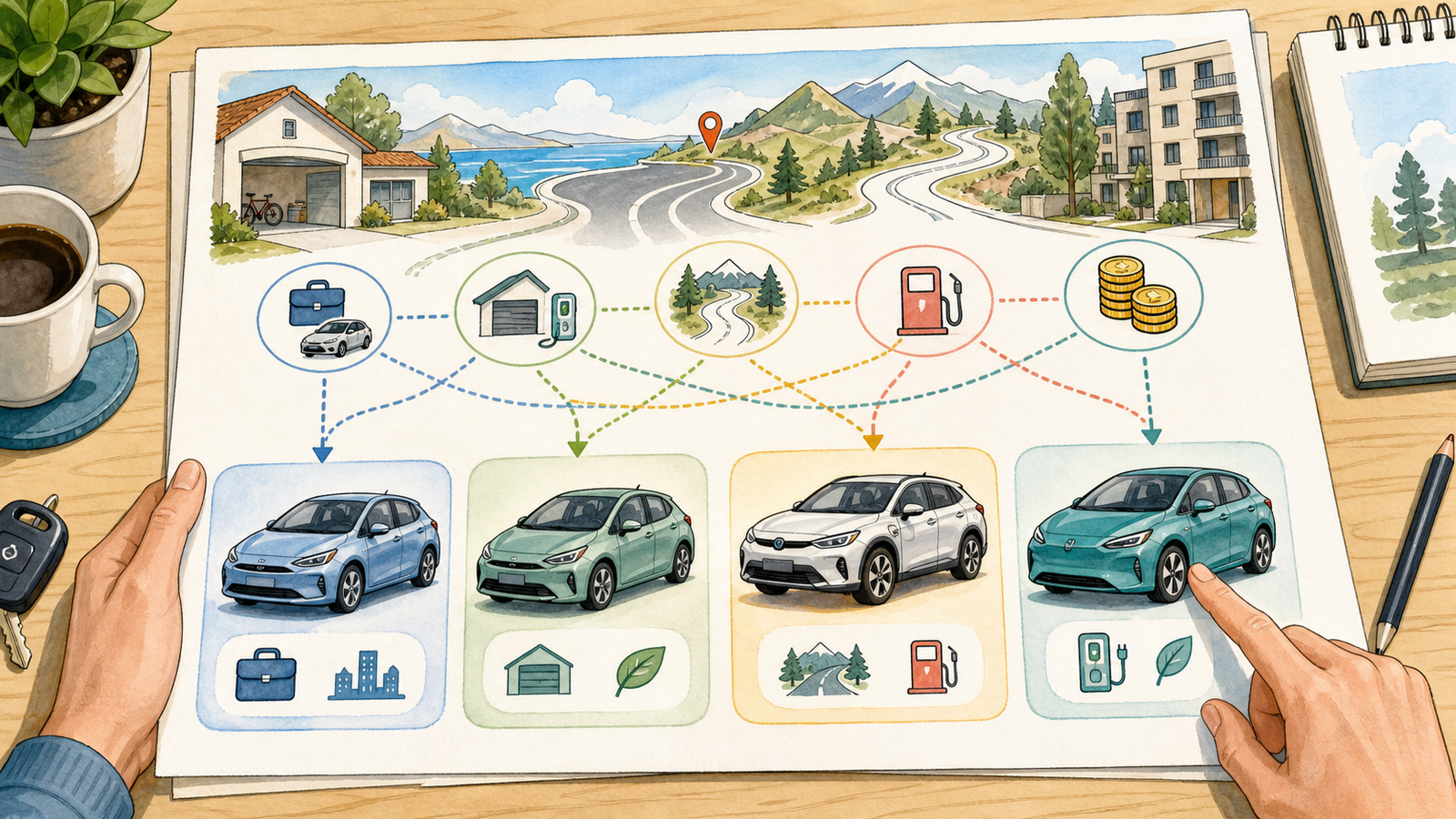
The XCarspace Powertrain Decision Table
| Your Situation | Best First Choice | Second Choice | Usually Avoid |
|---|---|---|---|
| Apartment, no charger, city commute | Hybrid | Efficient gas car | PHEV or EV without charging |
| Home charger, 40-mile daily commute | EV | PHEV | Thirsty gas SUV |
| Family SUV, frequent road trips | Hybrid | PHEV if charged often | Short-range EV without route planning |
| Low annual mileage, lowest purchase price | Gas | Used hybrid | Expensive EV bought only for savings |
| Two-car household, one commuter car | EV | Hybrid | Large gas vehicle for solo commuting |
| Rural driving, towing, long distances | Gas or hybrid truck/SUV | Diesel where suitable | EV without charging confidence |
What Dealers Often Do Not Explain Clearly
| Dealer Talking Point | What to Ask Instead | Why It Matters |
|---|---|---|
| “This EV has great range.” | What is the highway range in winter? | Rated range and real range can diverge |
| “This PHEV saves gas.” | How many electric miles will I use every weekday? | The value depends on charging behavior |
| “Hybrid batteries are complicated.” | What is the warranty and replacement history? | Trusted hybrid systems can be very durable |
| “Fast charging is easy.” | Which networks work on my actual routes? | Charging quality is local, not theoretical |
| “The monthly payment is low.” | What is the total price, APR, residual, and fees? | Powertrain savings can disappear in bad finance terms |
Final XCarspace View: Buy the Routine, Not the Badge
The strongest powertrain choice is the one that matches the boring parts of ownership. Where does the car sleep? How far does it drive on Tuesday? What happens in winter? Who services it? What does energy cost locally? The answers matter more than the badge on the hood.
For most buyers, a hybrid is the easiest low-risk upgrade. For home-charging commuters, an EV can be the cleanest long-term play. For disciplined owners, a plug-in hybrid can split the difference beautifully. For budget buyers and remote drivers, gas still has a role. The winning move is not choosing the most advanced technology. It is choosing the least annoying one to live with.
FAQ: Hybrid vs Plug-in Hybrid vs EV vs Gas
Is a hybrid better than an electric car?
A hybrid is better for buyers who cannot charge at home, drive long road trips often, or want better fuel economy without changing habits. An EV is usually better for buyers with reliable home charging and predictable daily mileage.
Is a plug-in hybrid worth it?
A plug-in hybrid is worth it if the owner charges regularly and most daily driving fits within the electric range. If it is rarely plugged in, a regular hybrid is often the smarter buy.
Do hybrids need to be plugged in?
Regular hybrids do not plug in. They recharge their small battery through the engine and regenerative braking. Plug-in hybrids have a larger battery and should be charged externally to deliver their best value.
What is regenerative braking?
Regenerative braking uses the electric motor to slow the vehicle and recover some energy back into the battery. It is most useful in city traffic and less important during steady highway cruising.
Are EVs cheaper to maintain?
EVs avoid oil changes and many engine-related services, but tire wear, insurance, depreciation, and charging costs still matter. The cheapest EV ownership usually comes from home charging and sensible purchase pricing.
Should first-time electrified-car buyers choose a hybrid or EV?
Buyers with no home charging should usually start with a hybrid. Buyers with a reliable home charger, stable commute, and good local electricity rates can confidently consider an EV.
References
- FuelEconomy.gov: Electric vehicle technology basics
- FuelEconomy.gov: Hybrid vehicle technology basics
- U.S. Department of Energy AFDC: Hybrid electric vehicles
- U.S. Department of Energy AFDC: Plug-in hybrid electric vehicles
- U.S. Department of Energy AFDC: Battery electric vehicles
- EPA: Electric vehicle myths and facts