Updated July 30, 2026.
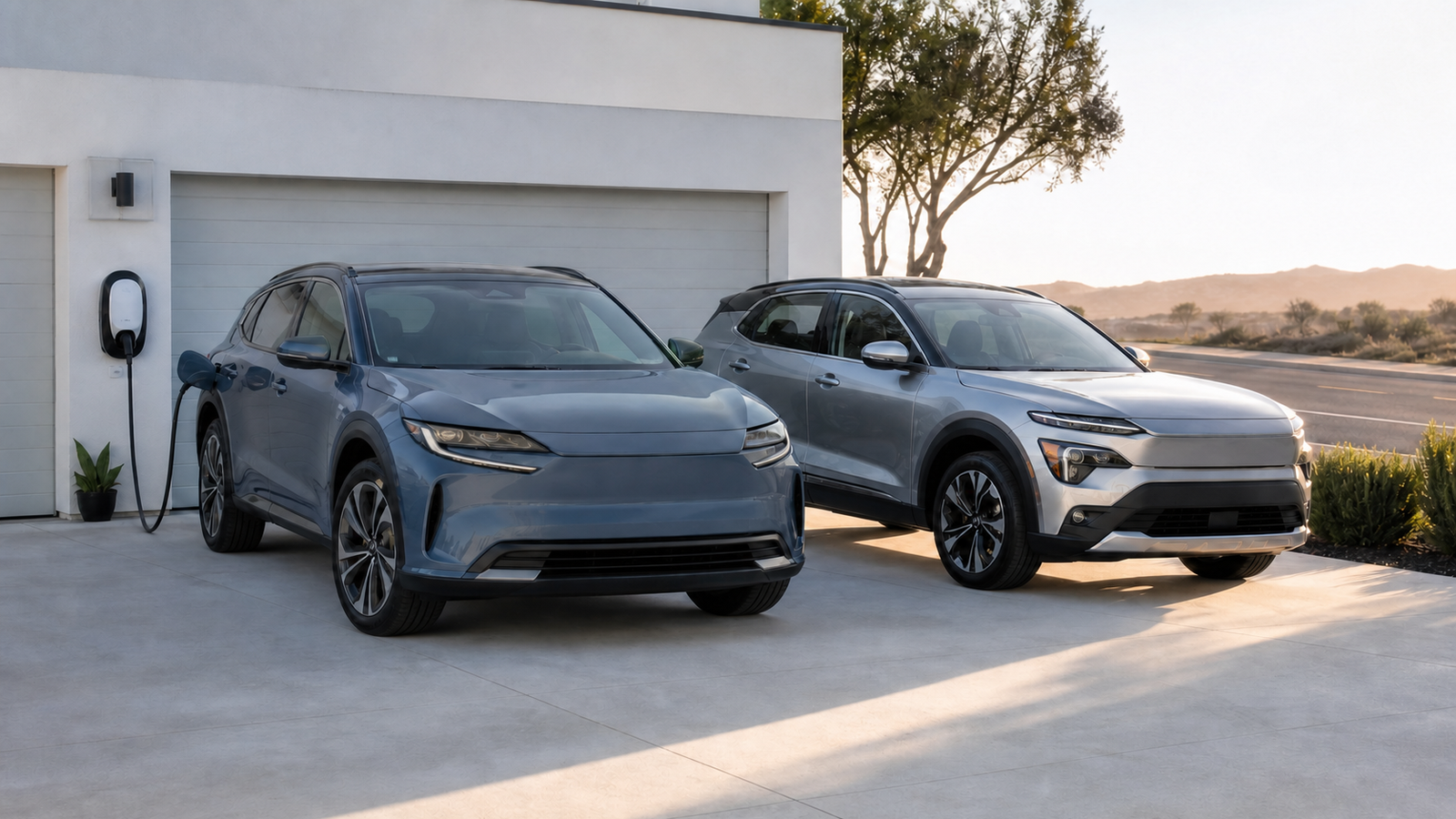
Choose a full EV if you have dependable home or workplace charging and its cold-weather highway range covers your hardest routine trip. Choose a plug-in hybrid if you can charge most days but still need gasoline flexibility for frequent long or remote drives. The answer changes when charging is unreliable: a PHEV that is rarely plugged in carries two powertrains without using its main advantage, while an EV fueled mostly at public fast chargers can lose much of its cost and convenience edge.
PHEV vs EV: The Quick Answer
| Buyer situation | Usually the better fit | Why |
|---|---|---|
| Reliable overnight charging; mostly local driving | Full EV | You use the simpler powertrain and avoid gasoline-system maintenance. |
| Reliable charging; frequent remote or 400+ mile days | PHEV | Daily miles can be electric while gasoline removes route dependence. |
| No dependable home or work charging | Neither by default | A conventional hybrid may be cheaper and easier than public-charging an EV or not plugging in a PHEV. |
| Two-car household with another road-trip vehicle | Full EV | The second vehicle absorbs unusual trips, so the EV can handle predictable daily work. |
| One-car household with unpredictable rural travel | PHEV | Gasoline backup has more practical value when there is no substitute vehicle. |
The Department of Energy’s Alternative Fuels Data Center says most current PHEVs provide roughly 20–40 miles of electric driving before operating on gasoline, while battery-electric vehicles typically provide about 150–400 miles. Those broad bands explain the hardware. They do not decide which vehicle fits your week.
Start With Charging, Not Advertised Range
A plug is useful only when it belongs to your routine. Write down where the car sleeps, whether the parking space is assigned, who controls the outlet, how often it is blocked and what you pay per kilowatt-hour. “There is a charger nearby” is not the same as having a charger available when you arrive home.
DOE guidance says many smaller-battery PHEVs can recover their daily use overnight on Level 1, while Level 2 can generally recharge a depleted EV overnight. Its home-charging guide also notes that equipment and installation depend on the home’s electrical capacity and parking arrangement. Get an electrician’s quote before treating home charging as a free accessory.
If your apartment or workplace charger is shared, test it at the hours you would actually use it. Check pricing, idle fees, reliability and whether access is guaranteed. Readers without a dependable plug should also see our detailed guide to owning an EV without home charging. In that situation, a conventional hybrid often deserves a place on the shortlist.
The purchase case also depends on how the car will be used after it reaches the driveway. Our guide to how often you should plug in a PHEV shows how daily, every-other-day and weekly charging change electric-mile share and fuel cost.
A PHEV Only Works as Intended When You Plug It In
The strongest PHEV use case is boring and repeatable: plug in after most driving days, cover the commute and errands on electricity, then let the engine handle occasional distance. A 35-mile electric range can be more useful than a 300-mile battery if the first vehicle is recharged every night and the second cannot be charged reliably.
The weak PHEV use case is equally clear. If the vehicle regularly leaves with an empty traction battery, it behaves mainly as a gasoline-powered hybrid while still carrying the battery, motor, engine, fuel system and associated purchase cost. Some PHEVs blend gasoline and electric power even with charge remaining, so do not assume every advertised electric mile is engine-free in every condition. The EPA’s current EV and PHEV overview explains the difference between all-electric and blended PHEV operation.
The Cost Comparison That Changes the Answer
Here is an illustrative energy-only comparison. It is not a national average and it is not a prediction for a specific vehicle.
- Distance: 12,000 miles per year.
- Full EV efficiency: 32 kWh per 100 miles.
- PHEV efficiency: 38 kWh per 100 electric miles and 35 MPG in gasoline operation.
- PHEV electric share: 70%, or 8,400 miles.
- Home electricity: $0.17 per kWh.
- Public fast charging example: $0.45 per kWh.
- Gasoline: $3.50 per gallon.
| Scenario | Formula | Annual energy cost |
|---|---|---|
| EV charged at home | 12,000 × 32 ÷ 100 × $0.17 | $653 |
| PHEV, 70% electric | (8,400 × 38 ÷ 100 × $0.17) + (3,600 ÷ 35 × $3.50) | $903 |
| PHEV, never plugged in | 12,000 ÷ 35 × $3.50 | $1,200 |
| EV using $0.45/kWh public charging | 12,000 × 32 ÷ 100 × $0.45 | $1,728 |
The full EV wins the home-charging example by about $250 a year. Move the same EV to expensive public charging and the result reverses. That is why a national fuel-price average cannot answer a household question.
This calculation excludes purchase price, depreciation, financing, insurance, maintenance, registration, charger installation, parking fees, incentives and time spent charging. Use the Fuel vs Electric Cost Calculator with your rates, then compare the complete ownership picture in the Total Cost of Ownership Calculator.
Road Trips: Frequency Matters More Than the Longest Trip
Do not buy around a trip you make once every three years without pricing the alternatives. Renting a gasoline vehicle for one unusual vacation may cost less than carrying an engine for every local mile. The calculation changes when long days happen monthly, when towing is involved, or when the destination is far from reliable charging.
For an EV, inspect the route rather than the national charging map. Check the actual stations, connector compatibility, backup locations, expected weather and the car’s charging curve. A high peak charging number does not mean the vehicle holds that rate from empty to full. DOE notes that most PHEVs cannot use DC fast charging; their small batteries are normally replenished on AC power. On a long trip, the PHEV’s practical advantage is quick gasoline refueling, not fast-charging its battery at every stop.
Cold Weather and Highway Speed Need a Range Margin
EPA range is a comparison tool, not a promise for every drive. The agency says cold weather, cabin conditioning and high-speed driving can significantly reduce range. Its updated range-testing explanation shows how laboratory results are adjusted for real-world factors, but your winter highway trip can still differ from the combined label.
Use your hardest recurring trip: winter temperature, highway speed, passengers, cargo, elevation and the charging you can count on at the destination. The XCarspace real-range calculator can organize those assumptions. If the trip consumes nearly the entire estimated battery, choose more range, add a planned charging stop or buy the PHEV. A paper-thin range margin becomes stressful after normal detours and battery aging.
Maintenance: The EV Is Simpler, but the Purchase Still Has to Add Up
A full EV has no oil changes, exhaust system, spark plugs or engine-related service. A PHEV still has those gasoline components even if the engine runs infrequently. DOE’s maintenance guidance states that PHEVs have general maintenance needs similar to conventional vehicles, while all-electric vehicles usually require less scheduled maintenance because they have fewer moving parts and fluids.
That does not make every EV cheaper to own. Tire size, vehicle weight, insurance, collision repair, depreciation and the purchase-price gap can exceed routine maintenance savings. Compare insurance quotes by VIN and use conservative resale estimates. Do not accept a dealer’s “zero maintenance” line for either vehicle.
Four Buyer Scenarios
1. The suburban commuter with a garage
A full EV is usually the cleaner recommendation when daily driving is predictable, overnight charging is cheap and a winter highway margin remains. The PHEV adds an engine that this buyer may rarely need.
2. The one-car rural household
A PHEV can be the better risk-management tool when medical visits, family obligations or work regularly create long, variable routes. The owner must still plug it in for local miles; otherwise a conventional hybrid may be the more honest purchase.
3. The apartment renter with public charging nearby
Neither plug-in option wins automatically. Track real charger availability and price for two weeks. If access is uncertain, a regular hybrid avoids both fast-charging dependence and the unused battery cost of a PHEV.
4. The two-car family
A full EV often fits well as the high-mileage daily vehicle when the second car can handle towing, remote travel or unusual winter trips. Buying two vehicles that both solve the same rare problem wastes money.
What Would Change the Recommendation?
- Free, dependable workplace charging can make an EV viable without a home charger.
- A much lower PHEV purchase price can outweigh modest EV energy and maintenance savings.
- Frequent towing or winter highway travel increases the value of the PHEV’s gasoline backup.
- A second household vehicle reduces the need to make one car cover every edge case.
- High public-charging prices can erase the EV’s fuel-cost advantage.
- A PHEV electric range shorter than the real commute can leave more gasoline use than the buyer expects.
- A faster-charging EV with a reliable route network can make regular road trips easier than an old rule of thumb suggests.
Questions to Answer Before You Buy
- Where will the vehicle charge on at least five nights each week?
- What is the all-in electricity price at that location?
- How many days last year exceeded the PHEV’s electric range?
- How many days exceeded the EV’s conservative winter range?
- Can the exact trim use the chargers on your recurring routes?
- What will a permitted home installation cost?
- What are the insurance quotes for both VINs?
- What maintenance remains on the PHEV’s engine schedule?
- Would a conventional hybrid plus occasional rental solve the same problem for less?
Final Decision
For a buyer with reliable home charging, a full EV is usually the stronger daily vehicle: simpler, quieter and cheaper to fuel at a reasonable residential rate. A PHEV earns its extra complexity when the owner will actually plug it in and regularly needs gasoline flexibility beyond the battery’s electric range.
If you cannot describe a dependable charging routine, pause before buying either. The best powertrain is not the one with the most technology. It is the one that fits the week you actually drive.
FAQ
Is a PHEV better than an EV for long trips?
A PHEV is usually easier on routes with sparse or unreliable fast charging because it can refuel with gasoline. A well-matched EV can still be the better overall purchase when long trips are rare and home charging handles almost every normal day.
Should I buy a PHEV if I cannot charge at home?
Usually not unless dependable workplace charging covers most use. Without regular charging, you pay for a plug-in system you rarely use. Compare a conventional hybrid before signing.
Does a PHEV need Level 2 charging?
Not always. Many PHEVs can replenish a typical daily charge overnight on a dedicated Level 1 outlet, but charging time varies by battery size and onboard charger. Verify the exact model and have the circuit assessed safely.
Which has lower maintenance costs?
A full EV generally requires less scheduled powertrain maintenance. A PHEV retains an engine and its service needs. Total ownership cost can still favor either vehicle after purchase price, insurance and depreciation are included.
Methodology and Sources
This guide compares U.S.-market powertrain behavior rather than ranking individual models. The cost example uses disclosed hypothetical inputs and rounds to the nearest dollar. Vehicle prices, incentives and model availability were deliberately excluded because they vary by trim, location and purchase date. Technical claims were checked against EPA and U.S. Department of Energy consumer guidance accessed July 30, 2026.